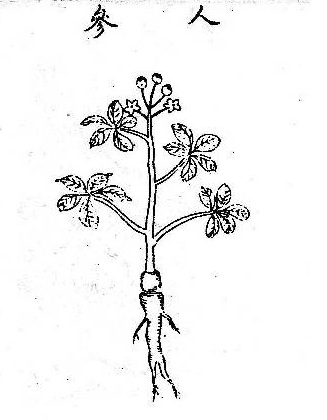
China's most important traditional book on pharmaceuticals.
This is so complicated. This chinese material medica does not only include the classification and use of plants and species. it also includes other medical treatments and working methods, such as some system-oriented stretching exercises (similar to kungfu) and medical use of needles onto human body.
- April 11 2015
It is a thorough and systematic compendium on Chinese parmacology until the mid-16th century. The book is arranged as guidelines (gang 綱) surrounding "meshes" (mu 目), the drug and its direct description constituting the guidelines, and its specifics corresponding to the "meshes". Other explanations see the 16 basic categories as "guidelines" and the subcategories of drugs as "meshes". Similarly, "genera" (like liang 粱 "millet") can be seen as guidelines, while "species" (like chiliang 赤粱 "red sorghum" and huangliang 黄粱 "yellow sorghum") are the "meshes". The description of individual drugs includes the origin of the materia, the place where it grows, lives or can be found, its appearance and collection method, as well as the preparation method of the required drug. Li Shizhen also explains experiences with the drug made by earlier physicians, and his own experiments. The entry of each drug is enriched by an appendix on treatment (fufang 附方), in which Li Shizhen explains 8,161 different recipes and treatment methods.
Li Shizheng's text is so comprehensive that the Bencao gangmu is not only a pharmaceutical book but can be used for informations on botany, zoology, chemistry and mineralogy. In the field of biology, for instance, Li Shizhen describes many details on lotus. He says that wild lotus has a red flowers, many stalks, but few roots, while the cultivated white lotus has precious roots. The species or kind of hehuan 合歡 has great heads, yeshuhua 野舒荷 opens at day and rolls in the petals at night, while shuilian 睡蓮 submerges during the night. The kind of jinlian 金蓮 has golden flowers, that of bilian 碧蓮 green flowers, and xiulian 繡蓮 flowers look like embroideries. In the field of geology or mineralogy he lists the places where petrol (shiyou 石油) is to be found in China, and explains that the local population stores the oil in jars and uses it as a fuel for lamps. The water lever in course terracotta jars can say a lot about the moisture of the air, as he explains, and can eventually predict rainfall. Li Shizhen gives an example to test the identity of chalcantithe (shidan 石膽, today called danfan膽礬). He also believed that the brain was the organ of the "primordial spirit" (yuanshen zhi fu 元神之府), and not, as traditionally believed, the heart.
Li Shizheng's text is so comprehensive that the Bencao gangmu is not only a pharmaceutical book but can be used for informations on botany, zoology, chemistry and mineralogy. In the field of biology, for instance, Li Shizhen describes many details on lotus. He says that wild lotus has a red flowers, many stalks, but few roots, while the cultivated white lotus has precious roots. The species or kind of hehuan 合歡 has great heads, yeshuhua 野舒荷 opens at day and rolls in the petals at night, while shuilian 睡蓮 submerges during the night. The kind of jinlian 金蓮 has golden flowers, that of bilian 碧蓮 green flowers, and xiulian 繡蓮 flowers look like embroideries. In the field of geology or mineralogy he lists the places where petrol (shiyou 石油) is to be found in China, and explains that the local population stores the oil in jars and uses it as a fuel for lamps. The water lever in course terracotta jars can say a lot about the moisture of the air, as he explains, and can eventually predict rainfall. Li Shizhen gives an example to test the identity of chalcantithe (shidan 石膽, today called danfan膽礬). He also believed that the brain was the organ of the "primordial spirit" (yuanshen zhi fu 元神之府), and not, as traditionally believed, the heart.

No comments:
Post a Comment